X19NiCrMo4 / 1.2764 Tool and Case-Hardening Steel | High-Toughness Nickel Alloy Steel
PRODUCT DESCRIPTION
X19NiCrMo4 (1.2764) is a high-nickel alloy tool and case-hardening steel offering core toughness, high surface-hardness potential and good polishability for demanding mould applications.MATERIAL INFORMATION
X19NiCrMo4 / 1.2764 Tool and Case-Hardening Steel
X19NiCrMo4, material number 1.2764, is a nickel-alloyed tool and case-hardening steel. Its low carbon content supports carburizing, while nickel, chromium and molybdenum contribute to core strength, toughness and hardenability.
The grade can be considered for highly stressed plastic injection moulds, press tools, profile rollers and specialist tooling where low distortion after heat treatment, core toughness and good polishability are important.
Material family: Tool and mould steels
Secondary classification: Case-hardening steels
Grade: X19NiCrMo4
Material number: 1.2764
Overview
X19NiCrMo4 / 1.2764 is a low-carbon nickel-chromium-molybdenum special steel containing approximately 4% nickel. After carburizing, it is intended to provide a hard surface combined with a tough and high-strength core.
Some technical references classify this grade as a cold-work tool steel or mould steel. In practical terms, it is best described as a high-toughness case-hardening steel for mould and specialist tooling applications. It is particularly relevant for complex moulds where dimensional stability after heat treatment is important.
Designations and Alternative Names
- DIN/EN designation: X19NiCrMo4
- Material number: 1.2764
- Commercial designations: ECN4M, ES 106 K, M130
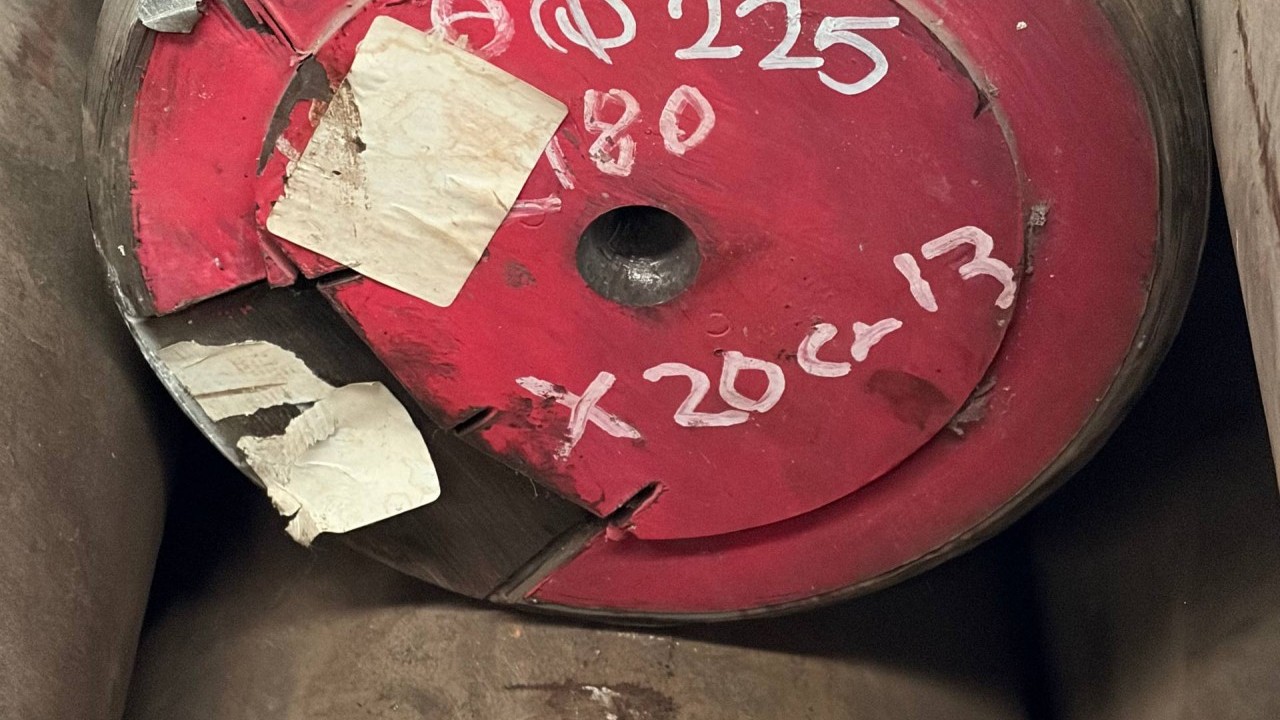
- Russia/CIS reference: 18Ch2N4MA
Important: Commercial and international references do not create automatic material equivalence. The chemical analysis, heat-treatment requirement, dimensions, delivery condition and certificate requirement must be confirmed before ordering.
Chemical Composition — Reference Ranges
| Element | Reference composition (%) |
|---|---|
| Carbon (C) | 0.16 – 0.22 |
| Silicon (Si) | 0.10 – 0.40 |
| Manganese (Mn) | 0.15 – 0.45 |
| Phosphorus (P) | max. 0.030 |
| Sulphur (S) | max. 0.030 |
| Chromium (Cr) | 1.10 – 1.40 |
| Molybdenum (Mo) | 0.15 – 0.25 |
| Nickel (Ni) | 3.80 – 4.30 |
Historic technical data may also show variants containing 0.30–0.50% tungsten (W) instead of molybdenum for specific applications. Therefore, the requested chemical analysis and certificate requirement should always be stated clearly rather than relying on the material number alone.
Reference Hardness Properties
The values below are for general technical reference. Actual hardness depends on section size, carburized-case depth, quenching medium, tempering temperature and the actual heat analysis.
| Condition | Reference hardness |
|---|---|
| Soft annealed | max. 255 HB |
| Hardened surface | approximately 62 HRC |
| After tempering at 100°C | approximately 62 HRC |
| After tempering at 200°C | approximately 60 HRC |
| After tempering at 300°C | approximately 58 HRC |
| After tempering at 400°C | approximately 56 HRC |
| After tempering at 500°C | approximately 52 HRC |
The high HRC values above refer to surface hardness after carburizing and hardening. Core hardness and core strength must be assessed separately according to component section size, case depth and heat-treatment procedure.
Reference Heat-Treatment Information
| Process | Reference temperature |
|---|---|
| Hot forming | 850 – 1050°C |
| Soft annealing | 620 – 660°C |
| Carburizing | 860 – 890°C |
| Intermediate annealing | 600 – 630°C |
| Hardening — oil / hot bath | 780 – 810°C |
| Hardening — air | 800 – 830°C |
| Tempering | 150 – 180°C |
Note: Heat-treatment temperatures are technical reference information only. The final process must be developed by a qualified heat-treatment specialist based on component geometry, required case depth, hardness target and furnace capability.
Key Characteristics
- High core toughness supported by high nickel content
- Potential for high surface hardness after carburizing
- Suitable for complex moulds requiring controlled heat-treatment distortion
- Good polishability in hardened condition
- Suitable structure for mould components operating under pressure and wear
- Designed for applications requiring a hard surface and tough core
Typical Applications
- Highly stressed plastic injection moulds
- Press and forming tools
- Profile rollers
- Complex engraved or precision moulds
- Special engineering parts requiring a hard carburized surface and tough core
- Mould applications requiring good surface finish and polishability
Machinability and Weldability
X19NiCrMo4 is more suitable for machining in the soft-annealed condition. Rough and finish machining should be planned before final carburizing and hardening. For precision moulds, machining allowance and heat-treatment distortion control should be included in the manufacturing plan.
Welding is not the principal manufacturing route for this grade. Where welding is unavoidable, the welding procedure should consider preheating, controlled cooling, cracking risk and possible post-weld heat treatment.
Information to Include in an Enquiry
- Required form: round, flat, plate, block or cut piece
- Dimensions, length, tolerances and surface condition
- Soft-annealed or other delivery-condition requirement
- Target case depth and surface-hardness requirement
- Chemical-analysis, EN 10204 certificate and ultrasonic-test requirement
- Cutting, rough machining or special-packing requirement
Stock, dimensions, form and certificate availability are confirmed lot by lot. Contact Saf Çelik for current availability and documentation options for X19NiCrMo4 / 1.2764.